
delivery · 8 min read
Cab Booking App Development in India: Dispatch Beats a Pretty Map
Riders do not remember your brand colour. They remember whether a driver accepted, whether the fare matched, and whether someone answered when the trip went wrong.
Updated 24 September 2026
A cab product is three apps pretending to be one
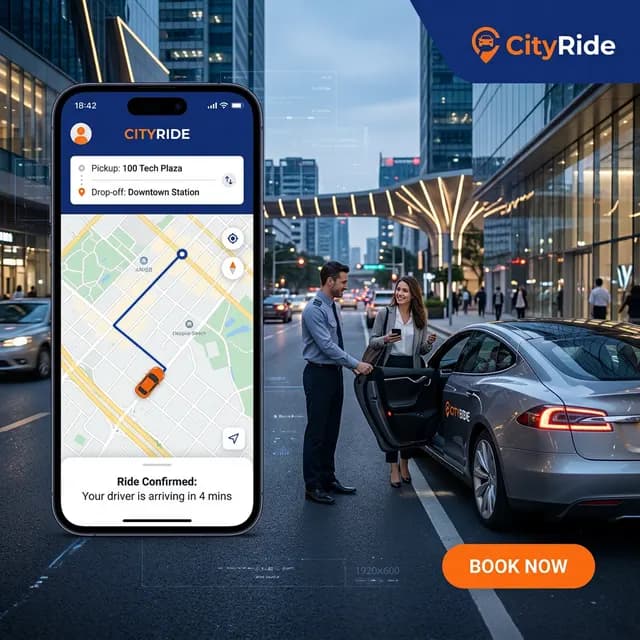
Riders want pickup, ETA, fare, and a working call/chat to the driver. Drivers want a trip they can accept without fighting GPS, a clear cash vs online instruction, and a way to go offline when they are at tea. Dispatch wants a map that is not a lie.
If you budget only for the rider screen, you will launch a brochure. Kiash Infotech’s Cab Booking App product treats rider, driver, and admin as the same system because a missed assignment is not a UI bug—it is a stranded passenger.
Local operators in India still run mixed fleets: some drivers on the app, some on a phone call from the office. Software that cannot show “unassigned / assigned / on trip / completed” will push the office back to shouting names.
Fare rules before animations
Night charges, waiting charges, extra stops, and “driver cancelled after reaching” are where trust dies. Write those rules as examples with rupee amounts before anyone designs a splash screen.
Cash plus UPI on the same trip is normal. The trip record must say what was collected, or your settlement with drivers will become a weekly argument.
Surge and coupons can wait. Wrong base fare cannot. A pretty map with a wrong number is worse than a plain screen with a correct one.
Dispatch that a human can override
Auto-assign is useful until it is not—airport queues, a VIP booking, a driver who is two minutes away but the algorithm disagrees. Admin must be able to assign or reassign with a reason.
Trip status the rider sees has to come from the same events the driver taps. Separate “office truth” and “app truth” is how you get one-star reviews that you cannot contest.
Keep the first release tight: book, accept, start, end, cancel, history. Wallet, rentals, and outstation packages are phase two once the core loop is stable at 50 trips a day.
What Indian operators forget in the RFP
Driver KYC and a simple on/off duty switch. Without them you cannot explain to police or to a rider who was in the car.
A support trail: who cancelled, at what time, with GPS if you have it. “The driver says he waited” is not an operations system.
Language. Many drivers will not fill English forms. If the driver app is English-only, your training cost explodes.
How we scope a first city launch
One city, one vehicle type, one fare card. Prove dispatch and settlement. Then add outstation or bikes. Companies that launch pan-India on a slide deck usually relive the same bugs in twelve towns.
Bring your current booking WhatsApp group and a week of trip notes. That is a better spec than a competitor feature matrix.
Request a demo of Kiash Infotech’s Cab Booking App. Call +91 956 571 5557. We will tell you what belongs in month one and what is decoration.
Questions people ask
- What should a cab booking app include in the first release?
- Rider book, driver accept/start/end, trip status, fare card, cash and UPI collection, cancel reasons, and admin override. Wallets, rentals, and pan-India packages can wait until one city is stable.
- Can a local taxi operator use this without becoming Uber?
- Yes. The product is for operators who still mix phone dispatch with an app. Human reassignment in admin is required; pure auto-assign is not enough for airport queues or VIP trips.